Or how I learned to clean flux.
When I discovered about this device I immediately wanted to build one for my self, even thought at the time I did not have any actual chips to test, but I knew I will need one for the 8bit computers I’m planning to build someday.
Retro Chip Tester Professional (RCT) was designed by retro enthusiast Stephan Slabihoud from Germany. I bought the PCB with a bunch of additional adapter card PCBs from the Stephan himself. Ordered the components from DigiKey, there is a quite a bit of them.
Apart from the fact that there is a lot of components, the board is not difficult to solder. Almost all components are THT, the ATmega processor comes already soldered. Though one evening might be not enough for this project.
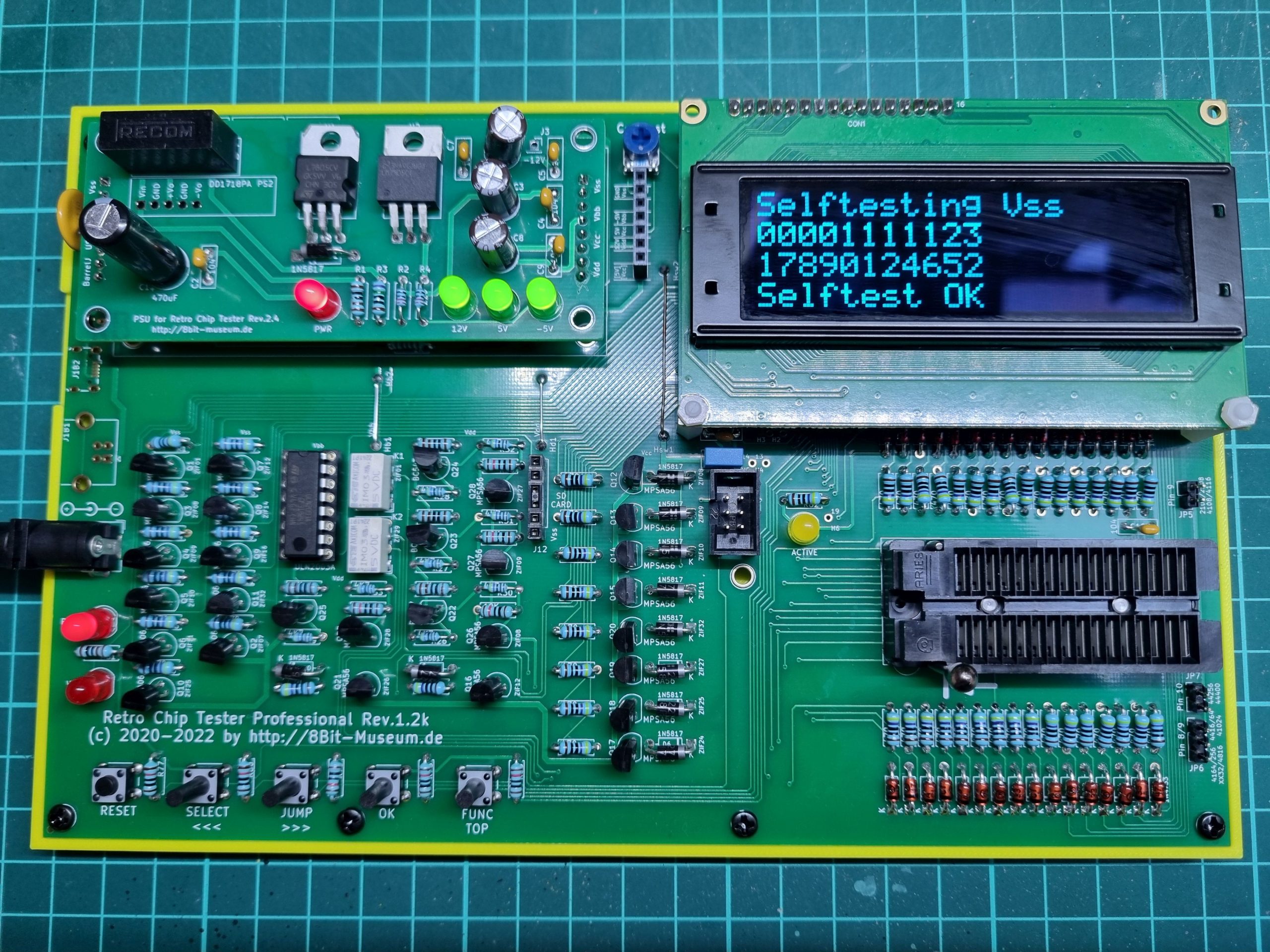
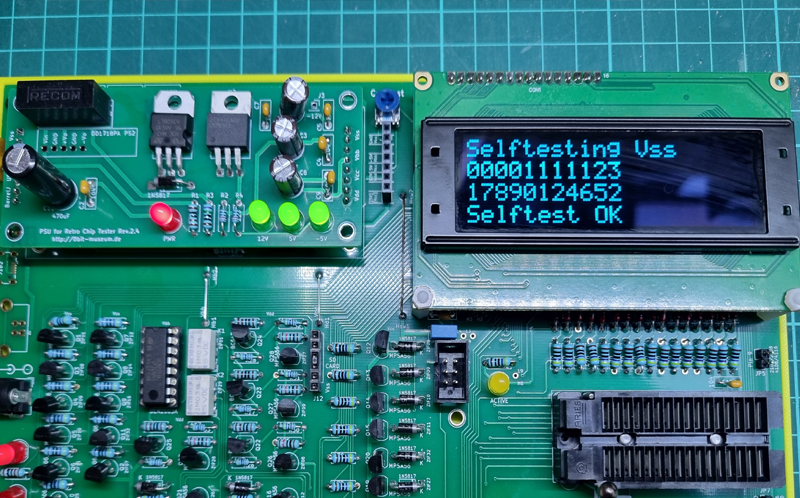
I remember when I finished the first board I thought that’s a job well done. At least it looked like that back then. When I finished soldering I run a integrated selftest and it failed. Interestingly enough it failed kind of at random. For example you bent a PCB a bit or put it in a case and it will produce a different failure. But all these failures were connected to a specific section of transistors it seemed. I have replaced some of them, but all the components I removed proved to be working fine. Eventually I ordered another board and build one more copy. I got the same bad selftest results… Stephan was very helpful in troubleshooting this issue. But nothing really helped, though he did said it couple of times that there seem to be too much flux left, but I did worked with a IPA and cotton swabs. Now I realize that I used way too much flux and some got onto front of the board and it is hard to clean under transistors. At some point I decided to wash the boards from flux really well. So I did this under running water, dried the board afterwards on a radiator. And guess what it started passing self test. Both boards started passing self tests! Lesson learned. Always wash the flux, especially when working with analog components, for digital no clean flux is fine.
With all the long breaks it took so long to finish this project (even though I literally soldered it right the first time) that I lost motivation in documenting the process… Anyway, the device now works perfectly and I’ve already tested some RAM chips, so it is proving to be useful.